Research with the hydrogel platform behind SENCE™ shows how mechanics and the ECM interface can change cell behaviour. Explore four demonstrated outcomes—and what they could mean for your work.
AGEING / RAT BRAIN PROGENITOR CELLS
Restored activity in aged progenitor cells.
In a rat brain-cell study, aged progenitor cells regained proliferation and differentiation activity on softer research hydrogels. Their environment helped determine what they could do.
Segel et al. · Nature · 2019 Rat oligodendrocyte progenitor cells (OPCs)
A cell-culture finding, not evidence of a human ageing treatment.
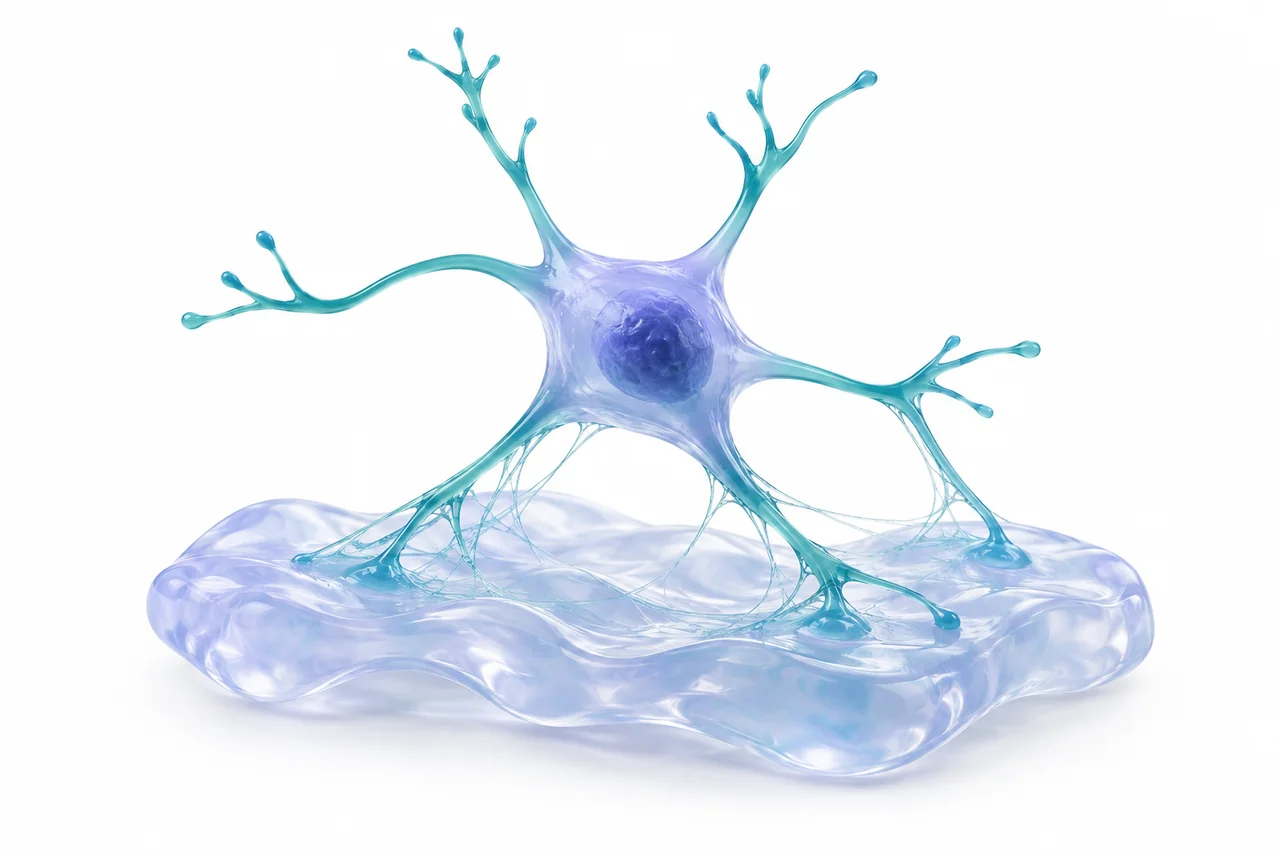
Conceptual illustration of a cell and its physical niche.
Mouse embryonic stem cells
Preserved stem-cell identity.
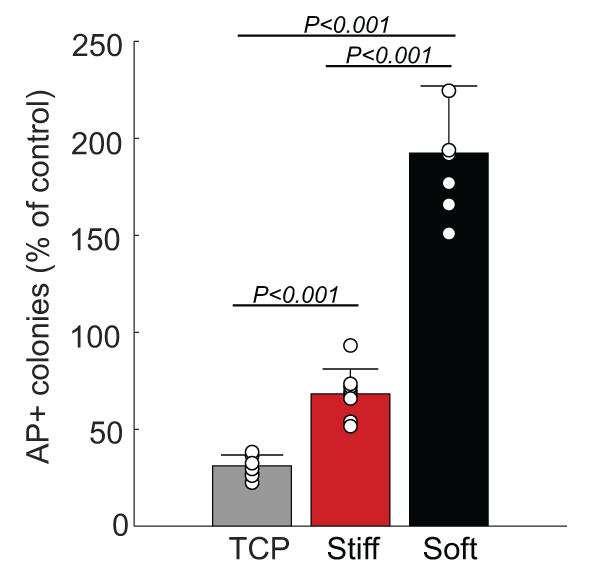
Mouse embryonic stem cells spent five days on plastic, stiff hydrogels or soft hydrogels in serum without LIF. All were then replated into the same self-renewal assay. Cells from the soft conditions formed more AP-positive colonies, supporting self-renewal in this tested system.
Original Figure 4b graph, cropped. Colonies staining positive for alkaline phosphatase (AP), counted relative to a separate serum+LIF/TCP reference; not a percentage of cells. Labouesse et al., CC BY 4.0.
Tet2-mutant mouse blood stem cells
Restrained mutant stem-cell expansion.
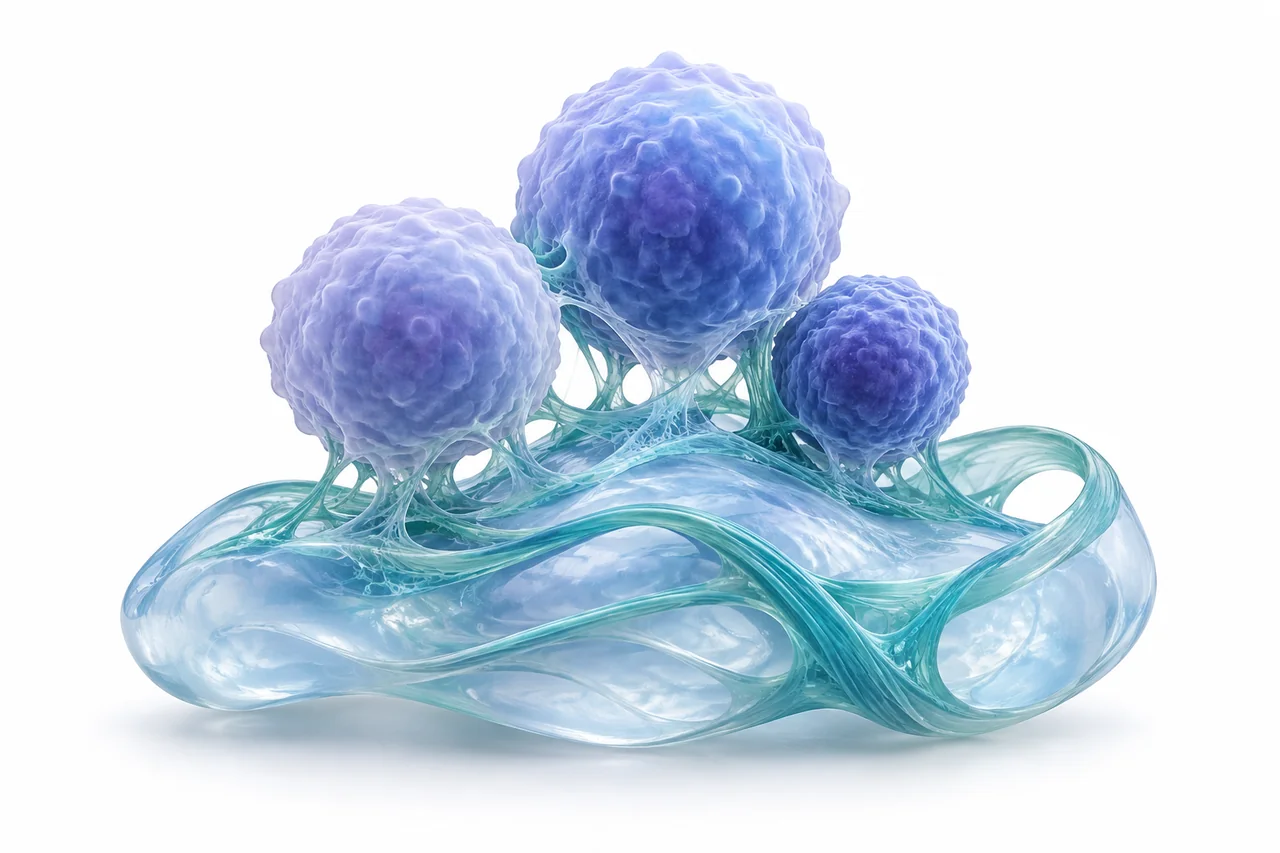
In Tet2-mutant mouse blood stem cells, a matrix protein anchored to research hydrogels reduced an expansion advantage. The same protein on plastic did not produce that effect.
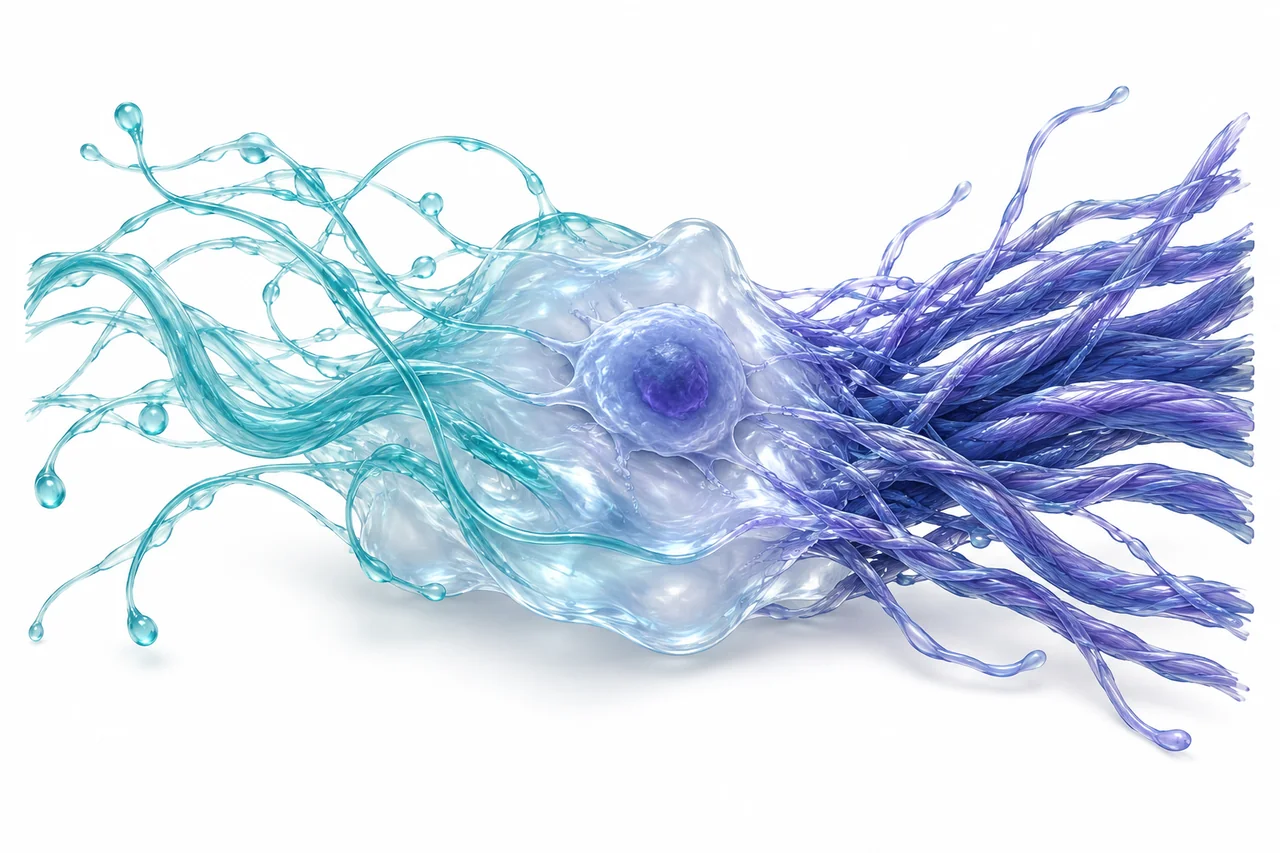
Mouse fibroblasts on soft research hydrogels showed a stronger response to BMP-7. The culture study helped reveal a role for physical context in repair signalling.
Cell and matrix illustrations are conceptual, not microscopy. Each story separates culture findings from animal interventions and possible customer evaluations.
FROM DEMONSTRATED RESEARCH TO YOUR NEXT QUESTION
What could SENCE™enable for you?
The customer films show how you could explore mechanobiology in discovery, screening, drug development and cell research. Each application connects a possible comparison to its supporting research.
Keep the model, material system and measured endpoint in view. Research findings establish specific possibilities; your own workflow needs its own evaluation.