
The question
When cells behave differently on two culture surfaces, what changed: the mechanics of the material, the proteins presented to the cells, or both? The distinction matters because a biological response can have more than one explanation.
The obstacle
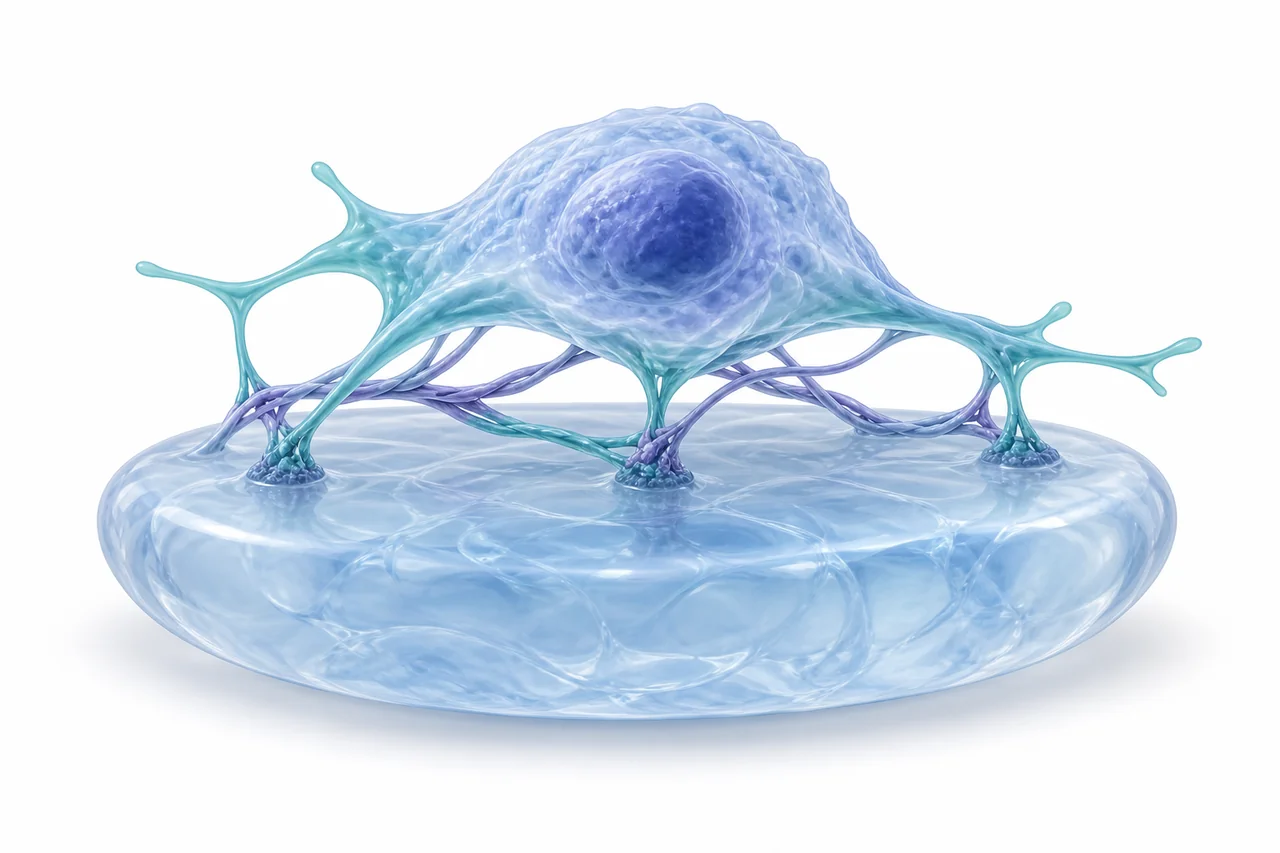
Cells encounter an interface of proteins attached to the material beneath them. If that interface changes during culture, a comparison described as “soft versus stiff” can also become a comparison of different attachment conditions.
The foundational StemBond study set out to control the mechanics and protein attachment separately, so the cell response could be interpreted with both in view.
What the investigators built
The researchers developed a polyacrylamide hydrogel system with AHA-mediated anchorage for covalent attachment of extracellular-matrix proteins. They varied the attachment conditions while controlling substrate stiffness, then examined both the material interface and pluripotent stem cells.
Read the study and its methods
Substrate stiffness
How does the material resist deformation?
Protein attachment
How are proteins presented and retained?
Interpret the cell response.
Read the biological result alongside both the material and its protein interface.
Conceptual diagram, not measured data or a specification for every commercial SENCE™ configuration.
Read the experiment in two stages
01 / THE MATERIAL
Establish what the cells encounter.
Characterise the substrate and its protein interface before interpreting a change in cell behaviour. Protein coverage, attachment strength and persistence answer different questions.
02 / THE CELLS
Ask which response was measured.
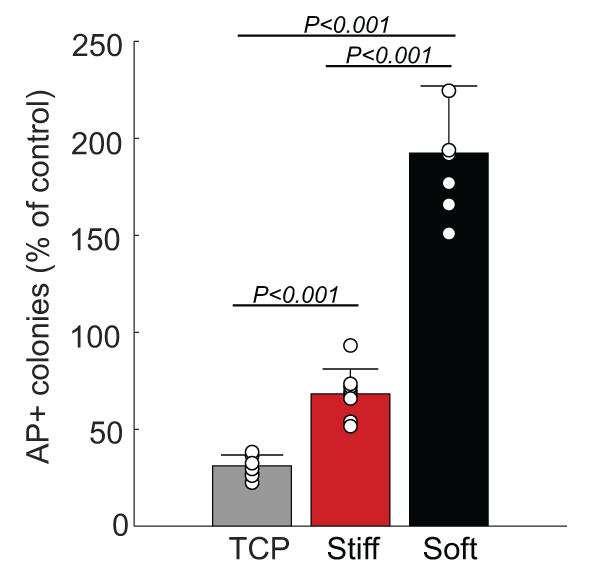
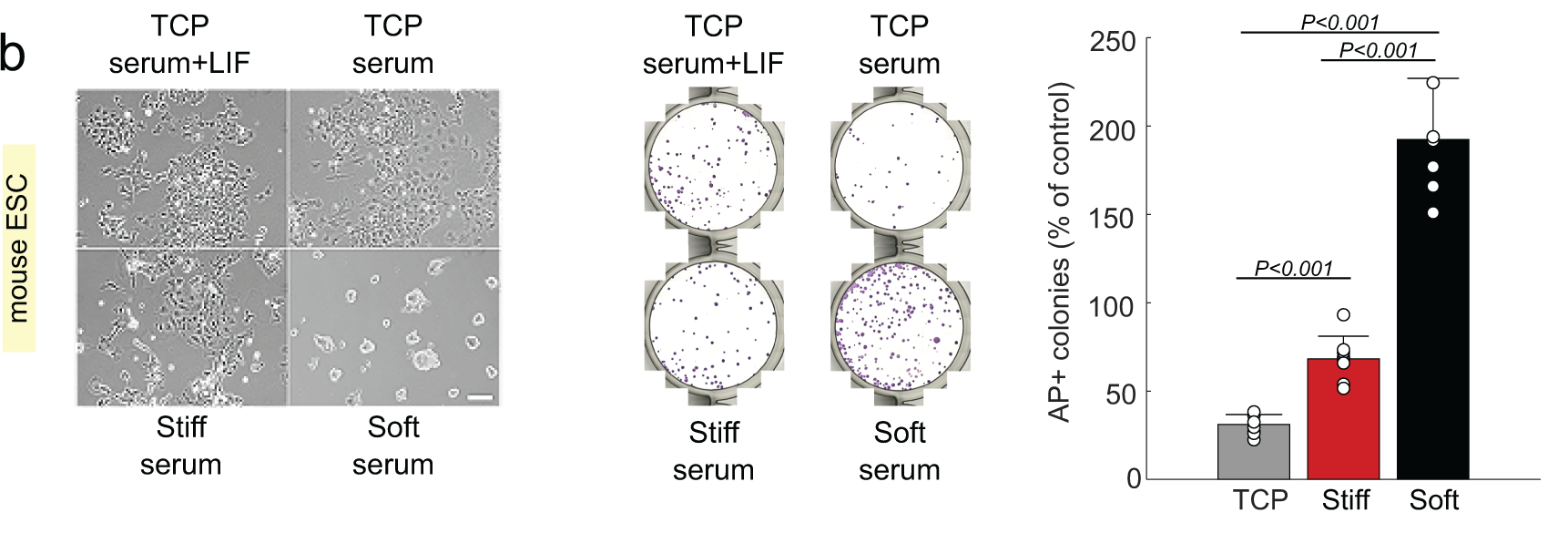
The study investigated mouse and human pluripotent stem-cell culture. Its biological readouts concern the tested conditions; “better cells” is too broad a replacement for those observations.
Keep the measurements separate
| Measurement | Question it addresses |
|---|---|
| Substrate stiffness | How does the material respond to force? |
| Protein coverage | How much protein is present at the surface? |
| Tethering strength | How strongly is the protein attached? |
| Coating persistence | What remains at the interface over time? |
These measurements should not be collapsed into a single “more protein” or “better coating” claim. The original figure legends provide the comparison conditions, units and statistical definitions.
Why it matters for your experiment
Begin by identifying the property you want to investigate and the conditions you need to hold constant. Then choose the attachment, cell-state or functional readout that would make the comparison useful.
This is an experimental-planning interpretation. It does not establish an optimal stiffness for a new workflow or guarantee that a commercial evaluation will succeed.